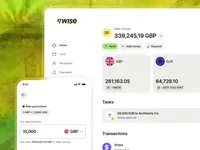
Comparez Wallester à Wise pour prendre une décision éclairée concernant vos besoins financiers. Que vous soyez intéressé par la banque mobile, des fonctionnalités uniques ou des avantages spécifiques, cette comparaison vous aidera à naviguer parmi certaines des différences entre Wallester et Wise.
Wise Business and Wallester Business are two fintech-powered business accounts with overlapping capabilities but different strengths. Wise Business is a multi-currency global account known for cheap international transfers at the real exchange rate and no monthly fees. It lets you hold 40+ currencies and get local bank details in key currencieswise.com, making it easy to get paid and pay others worldwide. Wallester Business, by contrast, is a free all-in-one corporate expense platform that focuses on issuing unlimited Visa cards and tracking expenses in real time. It supports multiple currencies with a personalized IBAN and helps companies save on fees by consolidating card spending and expense management in one place. In short, Wise is ideal for global banking and transfers, while Wallester excels at corporate card management and expense control, so businesses should choose based on whether their needs lean more toward international transactions or internal expense oversight.
Wallester
Virtual cards for instant online transactions
Seamless integration with various payment platforms
Customizable spending limits for users
Wise
Low-cost international money transfers
Multi-currency accounts for easy management
Real exchange rates without hidden fees
Average Neolista Scores
Compare the Neolista scores of Wise and Wise to the overall average score across all listed neobanks.
4.0
VS
4.5
VS
Directory average
4.2
Comment Wallester et Wise se comparent-ils ?
Wise Business and Wallester Business are two platforms that cater to companies looking for efficient, cost-effective financial tools. Both provide multi-currency accounts and digital banking features, but they have distinct strengths. This comparison explores their offerings in detail, from global payments and currency support to corporate cards, expense management, fees, integrations, and more.
Multi-Currency Accounts and Global Payments
Wise is well-known for its multi-currency account that lets businesses hold and send money in 40+ currencies and make payments to over 140 countries. Crucially, Wise provides local bank details (like IBANs, routing numbers, etc.) in numerous currencies – allowing you to receive funds as if you had a local account in those currencies. This means a UK business can get paid in USD or EUR without costly intermediaries. Wise emphasizes transparent international transfers: all currency conversions use the real mid-market exchange rate with no markup, and fees are shown upfront so there are no hidden charges. The result is often a cheaper way to send and receive cross-border payments compared to traditional banks. Wise’s international payment network is also fast – over half of business transfers arrive within 20 seconds, and 95% complete in under 24 hours. For efficiency, Wise supports batch payments to up to 1,000 recipients in one go, simplifying payroll or vendor payments for global businesses. Volume discounts are applied if you send or convert more than a certain threshold (e.g. £20k per month), reducing fees for high-volume users. All these features make Wise Business a powerful choice for companies operating internationally, enabling them to pay suppliers, freelancers, or teams abroad with ease and transparency.
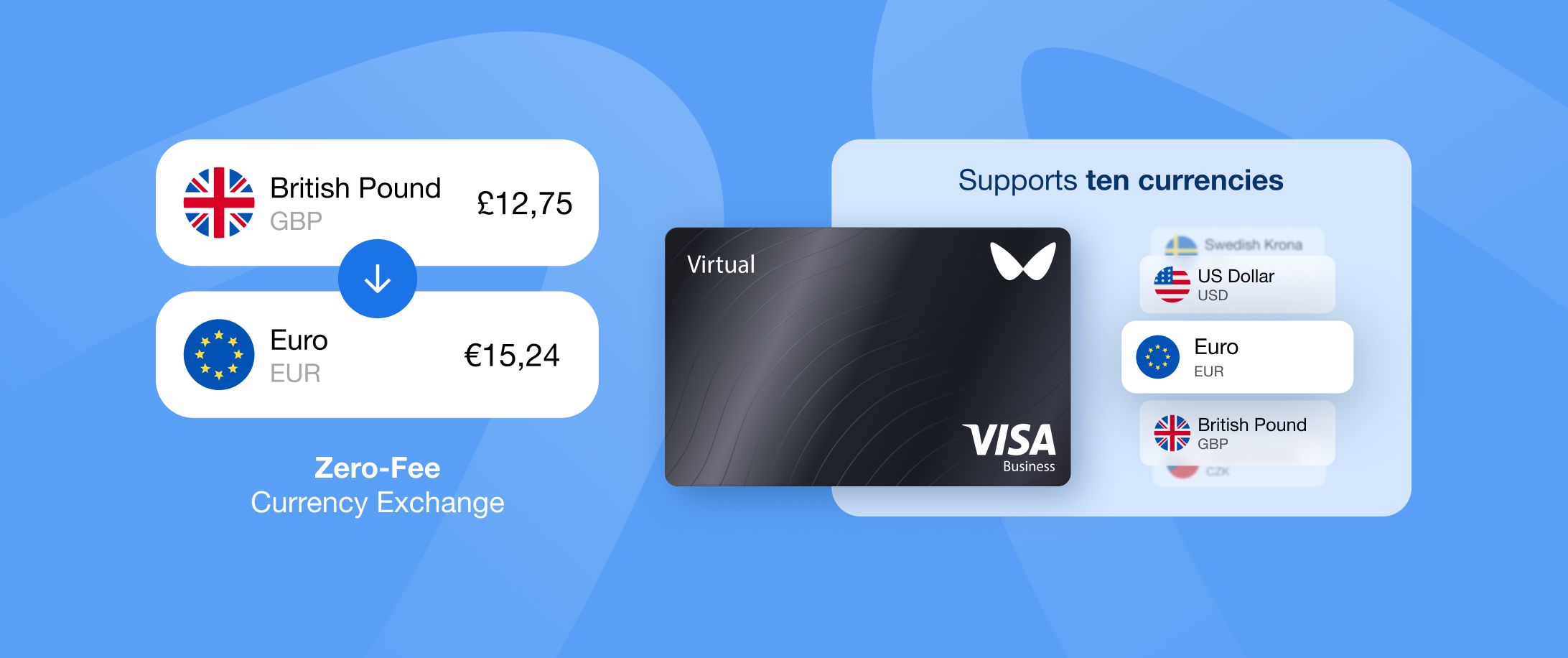
Wallester also offers robust multi-currency support, albeit with a slightly different approach. When you open a Wallester Business account, you receive personalized IBAN account details and can manage funds in multiple currencies such as USD, EUR, GBP, SEK, NOK, CZK, HUF, RON, PLN, and DKK. This multi-currency account setup allows businesses to transact in these currencies directly, avoiding frequent conversions and saving on exchange fees. In practice, a company using Wallester can hold and spend in the supported currencies, which is ideal for European and international expenses. Wallester’s platform is designed to consolidate financial services that businesses need – it combines expense management, card issuance, and payments. Notably, it supports bulk payment functionality as well: you can execute batch payments (for example, for payroll or supplier payouts) efficiently through the platform. While Wallester’s core strengths lie in card-based spending, the inclusion of bulk transfers and multi-currency IBAN accounts means it can handle global payments to a considerable extent. The platform’s multicurrency support helps minimize currency exchange costs for international transactions, aligning with Wallester’s goal of eliminating high banking fees for its users. In terms of reach, Wallester currently serves businesses in the UK, European Economic Area (EEA), and a number of other regions including the USA, Canada, UAE, and Singapore – making it accessible to companies in these markets for their global payment needs.
Corporate cards and expense management
Wise 👉 Wise provides business debit cards that work across multiple currencies, enabling you to spend directly from your Wise account balances. You can get both physical and digital (virtual) Wise Business cards for yourself and your team. The first physical card for the account is free, and additional cards for team members can be ordered for a small fee (e.g. £3 per extra card). All Wise cards allow you to spend in 170+ countries, automatically converting currencies at the same transparent rates whenever you pay in a currency you don’t hold. Business owners can set spending limits, receive instant spending alerts, and freeze or unfreeze cards through the Wise app, providing control and security for company spending. While Wise’s focus is on simplicity, it does offer basic expense management features: multi-user access lets you give team members controlled access to the account, with custom permission levels and payment approval workflows. This way, accountants or employees can log in under predefined roles – for instance, a team member might be allowed to initiate payments which an admin must approve. Wise also has a built-in invoice generator and the ability to request payments via shareable links, which can help small businesses streamline billing. However, it’s important to note that Wise’s expense management tools are relatively straightforward (focused on transactions and permissions). It does not, for example, have features like receipt scanning or advanced expense reporting built into the banking platform itself. Companies using Wise for expenses often rely on its integration with accounting software (covered below) to handle detailed expense tracking and reconciliation.
Wallester 👉 Expense management is where Wallester truly shines and differentiates itself. Wallester is essentially an all-in-one corporate expense management platform with card issuing capabilities at its core. Upon joining Wallester Business, companies can instantly issue an unlimited number of corporate Visa cards – both virtual and physical – for their employees or departments as needed. In fact, card issuance is extremely fast: you can create virtual cards in minutes via the web portal or mobile app, allowing employees to start spending immediately for authorized business purposes. Physical cards can also be distributed as required, and Wallester imposes no upper limit on how many cards you can have in use. Each card (or group of cards) can have custom settings: administrators set individual daily or monthly spending limits, control cash withdrawal permissions, and even share one virtual card among multiple employees for a project or team if desired. Every transaction on every card flows into a unified dashboard in real time, giving finance managers an up-to-the-minute view of company spending. Wallester’s system supports attaching receipts and invoices to each expense through their mobile app, helping eliminate missing paperwork – and they plan to introduce instant purchase reminders prompting employees to upload receipts right after each transaction. The platform provides detailed expense statements for any card or account, which can be exported in various formats for analysis. Essentially, Wallester replaces the need for separate expense tracking software: it offers a user-friendly dashboard with flexible settings, receipt management, budget controls, and multi-user access all built into the service. This level of granular control and oversight is ideal for companies that have many employees making purchases or that struggle with traditional expense claim processes. With Wallester, staff can spend with company-issued cards (including via Apple Pay or Google Pay on their phones), and management retains full visibility and control. Security is also tight – all Wallester cards come with 3D Secure 2.0 authentication for online payments and instant transaction notifications to reduce fraud risk. Overall, Wallester Business is built to streamline corporate spending and expense reporting, making it a strong choice for businesses focusing on expense control.
Fees and pricing
Wise 👉 Wise operates on a pay-as-you-go pricing model with no monthly subscription fees for its business account. To open a Wise Business account in the UK, there is a one-time setup fee (currently around £45), after which most features are free to use or charged per transaction. There is no ongoing monthly account charge – you only pay for certain actions like sending money, currency conversion, or ordering extra cards. International transfers and currency exchanges with Wise incur a low, transparent fee: typically a small fixed amount plus a percentage of the transfer (for example, ~0.4% depending on the currency). Crucially, Wise does not pad the exchange rate – you get the true mid-market rate, and the fee is shown upfront, so you know exactly the cost before confirming a transfer. Receiving money in the currencies for which you have local account details is generally free (for instance, receiving euros via your EUR IBAN or USD via ACH is free), while receiving some specific payment types (like a USD wire transfer) carries a fixed fee. The Wise debit card has no annual fee, and as noted, the first card is free; additional business cards cost a nominal fee to issue. ATM withdrawals are free up to a monthly limit (e.g. 2 withdrawals up to £200 total per month at no charge) and then come with a small withdrawal fee beyond that. Overall, Wise’s pricing is very competitive for international banking: you only pay for what you use, and those usage fees (transfers, conversions, etc.) are usually much lower than traditional banks’ rates. There are also cost-saving perks like 0.5% cashback on spending with the Wise Business debit card in some regions, and the aforementioned volume discounts for large transfers which can lower your percentage fee further. In summary, a Wise Business account is low-cost to maintain (no monthly fee), with modest fees tied to specific transactions that deliver significant value (fast, cheap currency exchange and payments).
Wallester 👉 Wallester’s pricing model is strikingly generous for businesses, especially those needing lots of cards. The base Wallester Business account is free – there are no setup fees and no monthly subscription costs to use the platform. A company can sign up and start issuing cards without paying anything upfront or per month. In fact, the free plan includes up to 300 virtual cards at no cost, and allows an unlimited number of users (employees) on the platform. Even physical card issuance is unlimited under the free plan (the company would just cover the production cost of the physical cards, if any) and there are no fees for maintaining the account or a minimum balance requirement. Wallester makes its money from interchange partnerships (with Visa and others) rather than charging businesses, which is how it sustains offering a free service. This means typical banking fees – like monthly account fees, card fees, or hefty transaction fees – are largely absent. All core features are accessible on the free tier, but Wallester also offers paid plans for companies that need to scale up further. For example, the Premium plan (around €199/month) includes 3,000 virtual cards and adds advanced features like accounting integrations and detailed analytics, and a higher-tier Platinum plan (€999/month) allows up to 18,000 virtual cards plus a dedicated account manager and custom onboarding support for larger enterprises. Importantly, even these plans price out very affordably on a per-card basis (only a few cents per card per month). For most small and mid-sized businesses, the free plan is likely sufficient, and it truly comes with “no hidden fees” as advertised. In practice, a client could issue hundreds of company cards and manage expenses in multiple currencies without paying platform fees – a value proposition that is hard to beat. It’s worth noting that while the platform is free, if your team exceeds the included card counts or needs premium-only features, you would then opt into the paid plans. Still, Wallester’s approach removes many traditional cost barriers, allowing companies to save significantly on banking and expense management costs by consolidating these services with Wallester.
Integrations and additional features
Wise 👉 Beyond banking and payments, Wise provides integrations and tools that help businesses streamline their financial operations. A key benefit is the ability to sync Wise with popular accounting software like Xero, QuickBooks, FreeAgent, and Sage. This integration means that transactions from your Wise account can flow automatically into your accounting system, reducing manual data entry and ensuring that multi-currency transactions are properly recorded. Wise’s platform can also be connected via API (Application Programming Interface) for businesses that want to automate workflows or integrate Wise into their own apps, though this is often leveraged through the separate Wise Platform product. Out of the box, most users will utilize the direct integrations or export transactions for their bookkeeping. Wise Business also has useful features for managing cash flow: it offers an interest/returns feature on balances in certain currencies. For example, UK businesses can opt to earn a variable return (around 3.5% APY) on GBP, EUR, and USD balances by placing them in Wise’s interest-bearing program (with appropriate safeguards and disclaimers). This allows companies to earn a yield on spare cash without locking it away – interest is accrued daily, and funds remain available (though not guaranteed, as it’s an investment fund mechanism). Additionally, Wise’s invoice and billing tools deserve mention. Within the business account, you can create and send professional invoices for free, and even set up payment links for clients to pay you by card easily. Coupled with the multi-currency receiving accounts, this makes Wise convenient for freelancers and businesses invoicing overseas clients. In terms of scale, Wise Business is quite flexible: it works for sole traders and startups, yet also supports larger companies with features like multi-user access and approval workflows as noted earlier. While it may not have specialized modules like payroll or advanced budgeting built in, Wise covers the essentials for international business banking and can fit into a broader financial tech stack via its integrations.
Wallester 👉 Wallester likewise extends its functionality through integrations and developer-friendly features, especially as businesses grow. One of the standout offerings is an open REST API that comes even with the free plan. Companies can use Wallester’s API to programmatically issue cards, set card controls, pull transaction data in real time, and integrate the platform with their own software or backend systems. This is a significant advantage for tech-savvy businesses or those that want to embed Wallester’s card functionalities into their own apps (for instance, a fintech startup could utilize Wallester’s API to issue cards to their users under the hood). In addition, Wallester’s Premium plan includes accounting software integrations. This suggests that transactions can be exported or synced with external accounting systems, similar to how Wise operates, though the exact software supported isn’t listed on the site. Still, even without an automatic sync, Wallester provides easy export of expense data (in formats like Excel, CSV, XML) which can be imported into accounting tools. The platform also boasts built-in analytics for spending. Premium users get more detailed analytics dashboards, but even at the base level, admins can analyze expenses by category, card, or team to glean insights on where money is going. Another extra feature is Wallester’s dedicated Payroll solution (offered as part of Wallester Business). This program allows companies to issue payroll cards to employees or contractors and process salary payments through Wallester instead of traditional bank transfers. With it, businesses can pay up to 1,500 employees at once and the funds are delivered instantly onto the employees’ Wallester cards. This is especially useful for firms with many freelancers or international staff, as it bypasses delays and fees of normal bank payroll. The payroll cards are free for cardholders and cost the company only a nominal fee (the site mentions around €1 per month per cardholder for this service). The benefit is that employees don’t need a bank account – the payroll card itself acts as the account where their salary is deposited. While not every business will need the payroll feature, it showcases Wallester’s approach of covering various financial needs on one platform. Finally, Wallester’s client portal and mobile app are noteworthy – they provide a user-friendly dashboard for all these functions, and mobile access means administrators and employees alike can manage cards, view balances, and upload receipts on the go. In essence, Wallester is not just a bank alternative; it’s an integrated expense and finance management system with the extensibility (via API and integrations) to adapt to different business workflows.
Security and support
Wise 👉 With millions of customers trusting it for moving large sums, Wise prioritizes security and regulatory compliance. Wise is fully regulated as an authorized financial institution in each jurisdiction it operates – for example, in the UK it’s regulated by the Financial Conduct Authority (FCA). Customer funds are safeguarded by being held in established financial institutions (in the UK, funds are safeguarded per FCA regulations). Wise employs industry-standard security measures such as two-factor authentication (2FA) to protect account access, and it has dedicated fraud prevention teams monitoring transactions. The platform’s transparency itself is a form of security: by always showing the exact fees and rates, it reduces the chance of unexpected financial losses. In terms of support, Wise offers 24/7 customer support for business users. Businesses can get help via email, phone, or chat at any time, which is critical when dealing with international transactions across time zones. Additionally, Wise’s long track record (formerly known as TransferWise) and large user base (700,000+ businesses and counting) lend confidence that it’s a stable and trusted service. The company moves over £14 billion every month for its customers, demonstrating significant experience in handling high volumes of funds securely. User reviews (such as a strong Trustpilot rating) further reflect Wise’s reputation for reliability in the fintech space.
Wallester 👉 As a newer comprehensive solution, Wallester also places heavy emphasis on security and compliance. Wallester is a licensed financial service provider – it’s licensed and supervised by the Estonian Financial Supervisory Authority (Finantsinspektsioon), meaning it meets EU regulations for e-money and payments. Moreover, Wallester is a Principal Member of Visa, which not only allows it to issue Visa cards directly but also indicates that it adheres to Visa’s stringent operational and security standards. All transactions and data on Wallester’s platform are protected under PCI DSS Level 1 compliance (the highest level of payment card industry data security standard), ensuring that card data is handled with top-tier security protocols. In practical terms, each Wallester Business card transaction uses advanced security like 3D Secure 2.0 for authentication, and the platform’s instant notifications help catch any fraudulent activity immediately. Wallester also includes fraud monitoring services as part of its offerings, which likely use algorithms to detect suspicious spending patterns. On the customer support side, Wallester provides real-time support and even a personalized approach with a dedicated account manager for business clients. This means as a Wallester Business user, you can expect attentive service – having a dedicated manager can be especially helpful during onboarding or if your company has specific requirements to discuss. The platform’s help center and knowledge base are available for self-service, but being able to reach out directly for guidance is a valuable perk, particularly for larger organizations managing many cards and transactions. In summary, Wallester backs its cutting-edge features with a strong security framework and hands-on support, ensuring companies can confidently entrust it with their financial operations.
Wrap-up
Wise Business and Wallester Business each offer powerful solutions for modern businesses, but they cater to slightly different needs. Wise Business is an excellent choice for companies that operate globally and need a simple, low-cost multi-currency account for international transfers, payments, and currency exchange. It shines in saving money on cross-border transactions with transparent fees and provides just enough tools (like batch payments, invoicing, and accounting integration) to streamline international business finances. It’s especially popular among freelancers, e-commerce sellers, and SMEs that value ease of use and worldwide reach. Wallester Business, on the other hand, is ideal for businesses that want to optimize corporate spending and expense management. It offers an entire expense control ecosystem – free of charge – which is extremely attractive for startups and enterprises that issue lots of corporate cards or need to tightly manage employee expenses. Wallester can massively simplify how a company handles purchases, reporting, and reimbursements, all while supporting multiple currencies for companies with international activities. In short, if your priority is international banking and transfers with no-fuss, low fees, Wise may be the better fit; if your focus is on empowering your team with corporate cards and real-time expense oversight, Wallester could deliver more value. Some businesses might even use both: for example, Wise for cross-border payments and Wallester for internal expense cards. Both neobanks are safe, innovative, and far more affordable than traditional banks, highlighting how fintech is revolutionizing business finance. Ultimately, the best choice comes down to your company’s specific requirements – global payments vs. expense management, or perhaps both – and these two services stand out as top options in their respective specialties.
Still have a few things you'd like to know about Wallester and Wise, or the difference between them?
Wise Business is generally stronger for international transfers. It supports payments to over 140 countries, uses the real mid-market exchange rate, and shows fees upfront. Wallester supports multi-currency IBAN accounts and bulk transfers, but its core strength lies in expense management rather than global remittances.
Yes, many businesses may benefit from using both. Wise can be used for cost-effective cross-border payments, while Wallester can handle internal corporate spending with unlimited cards and detailed expense tracking.
Correct. Wallester offers a genuinely free plan that includes up to 300 virtual cards, unlimited physical cards, and unlimited users with no setup or subscription costs. Paid plans are available for businesses that need thousands of cards or advanced analytics.
Wise Business cards are linked to your Wise account balances and allow global spending in 170+ countries. Wallester issues unlimited Visa cards—virtual or physical—with custom limits, receipt capture, and detailed reporting, making it a more advanced expense management tool.
Wise offers direct integrations with platforms like Xero, QuickBooks, Sage, and FreeAgent. Wallester provides data exports on its free plan, with direct accounting integrations available in its paid plans.
Yes. Wise is regulated by the Financial Conduct Authority (FCA) in the UK and safeguards client funds in established financial institutions. Wallester is licensed by the Estonian Financial Supervisory Authority, is a Visa principal member, and complies with PCI DSS Level 1 security standards.
Wise a une note Trustpilot de 4.3 sur 5, basée sur 252,282 avis.
App Store
Wise a une note de 4.7 sur 5 sur l'App Store d'Apple, basée sur 86,863 avis.
Play Store
Wise a une note de 4.8 sur 5 sur le Google Play Store, basée sur 1,222,624 avis.
"Excellent customer service and very efficient! I applied for the account on Friday, had a public holiday on Monday, and received my account by Tuesday. I highly recommend this service!"
Cabine
"Wallester" review from TrustPilot
"Consistently impresses me with their attention to customer needs. Better than any other bank I've used. I appreciate little gestures like refunding savings from currency exchanges. Highly recommend."
Christophe
"Wise" review from TrustPilot
Wallester est idéal pour les entreprises.
Wallester n'est disponible que pour les clients professionnels.